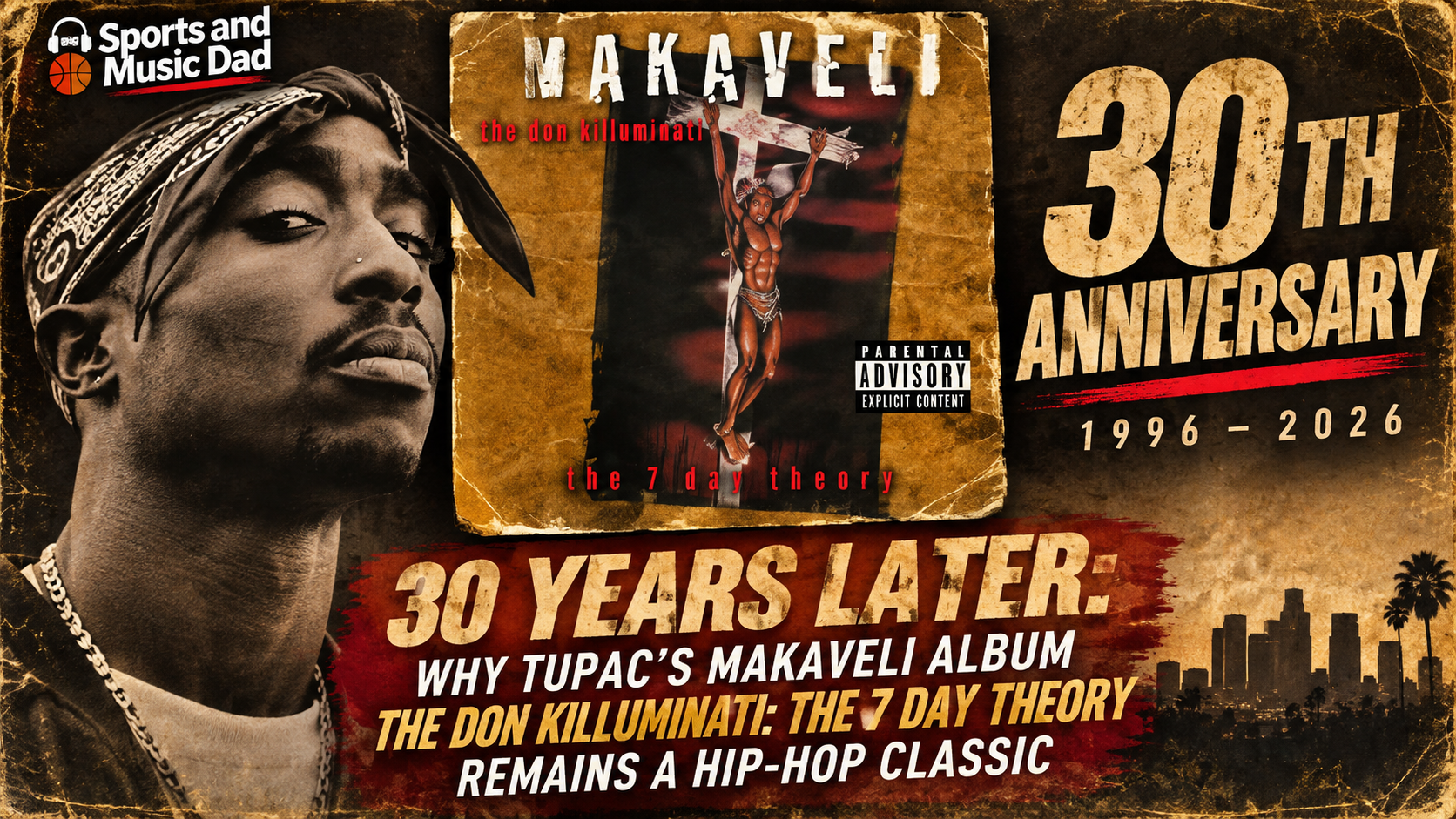
November 5, 2026, marks the 30th anniversary of one of the most legendary and controversial albums in hip-hop history. On November 5, 1996, the world was introduced to The Don Killuminati: The 7 Day Theory, released under the name Makaveli by the late, great Tupac Shakur. The album arrived less than two months after Tupac was tragically killed in Las Vegas on September 13, 1996.
For many hip-hop fans, including those who grew up during the golden era of 1990s rap, this album holds a special place in music history. It wasn’t just another Tupac project. It was darker, more aggressive, more personal, and filled with the type of emotion that made Tupac one of the greatest rappers ever.
Thirty years later, the Makaveli album remains one of the most discussed projects in hip-hop history. From its unforgettable album cover to the legendary diss tracks and emotional storytelling, The 7 Day Theory continues to influence generations of artists and fans.
The Story Behind the Makaveli Album
Following the massive success of All Eyez on Me earlier in 1996, Tupac returned to the studio with an entirely different mindset. While All Eyez on Me featured party records, street anthems, and superstar collaborations, the Makaveli album had a much darker atmosphere.
Tupac recorded the album during an intense period of his life when tensions involving Death Row Records, Bad Boy Entertainment, and the East Coast-West Coast rivalry were reaching dangerous levels.
The album was recorded in a remarkably short period, with its title referencing the project’s rapid creation. Tupac adopted the name Makaveli, inspired by Italian political philosopher Niccolò Machiavelli.
One of the most striking elements of the project was its cover artwork. It depicted Tupac on a cross, wearing a crown of thorns. The image immediately generated controversy, but it also became one of the most recognizable album covers in hip-hop history.
Released through Death Row Records and Interscope Records, the album debuted at number one on the Billboard 200 and eventually achieved multi-platinum certification.
The Legendary Tracks That Defined the Album
One reason The Don Killuminati: The 7 Day Theory has stood the test of time is its incredible collection of songs. Despite featuring only 12 tracks, the album delivers an unforgettable listening experience.
- Hail Mary
Arguably the most recognizable track from the album, “Hail Mary” remains one of Tupac’s greatest records.
The haunting production, chilling delivery, and unforgettable chorus helped make it a hip-hop classic. The song shows Tupac’s ability to combine spirituality, paranoia, street life, and aggression into one powerful record.
Even three decades later, “Hail Mary” continues to receive recognition as one of the defining songs of his career.
- Toss It Up
“Toss It Up” offered a different sound from much of the album. Featuring K-Ci & JoJo, Danny Boy, and Aaron Hall, the song blended R&B melodies with Tupac’s aggressive delivery.
It also demonstrated his versatility. Tupac could create an emotional street anthem, a hard-hitting diss record, or a radio-friendly track without losing his identity.
- To Live & Die in L.A.
This is one of the greatest West Coast hip-hop anthems ever recorded.
Featuring Val Young, “To Live & Die in L.A.” celebrated the city that helped shape Tupac’s career. The smooth production provided a contrast to the darker material throughout the album.
The song remains a timeless tribute to Los Angeles and West Coast culture.
- Bomb First (My Second Reply)
The opening track immediately established the tone for the album.
“Bomb First” features E.D.I. Mean and Young Noble of the Outlawz and delivers an aggressive message aimed at Tupac’s rivals.
The intensity of the record made it clear that listeners were about to experience a different side of Tupac.
- Against All Odds
If there was ever a track that demonstrated Tupac’s willingness to confront his enemies directly, it was “Against All Odds.”
The closing record featured some of his most direct lyrical attacks, addressing several individuals connected to the music industry and ongoing rivalries.
It remains one of the most talked-about diss tracks in hip-hop history.
- Blasphemy
“Blasphemy” is another standout record that shows Tupac’s deeper lyrical abilities.
The track explores religion, betrayal, social issues, and the struggles facing young Black men in America.
It serves as a reminder that Tupac was much more than an aggressive rapper. He was also a storyteller who challenged listeners to think about the world around them.
Complete Makaveli Album Track list
The Don Killuminati: The 7 Day Theory — 1996
| # | Song |
| 1 | Bomb First (My Second Reply) |
| 2 | Hail Mary |
| 3 | Toss It Up |
| 4 | To Live & Die in L.A. |
| 5 | Blasphemy |
| 6 | Life of an Outlaw |
| 7 | Just Like Daddy |
| 8 | Krazy |
| 9 | White Man’z World |
| 10 | Me and My Girlfriend |
| 11 | Hold Ya Head |
| 12 | Against All Odds |
Why the Makaveli Album Was Different From All Eyez on Me
When discussing Tupac’s greatest albums, the conversation usually comes down to Me Against the World, All Eyez on Me, and The Don Killuminati: The 7 Day Theory.
Each album represents a different chapter in Tupac’s career.
All Eyez on Me was a massive double album filled with superstar collaborations, West Coast production, and unforgettable hits. It captured Tupac at the height of his commercial success.
The Makaveli album, however, felt more focused and intense.
Instead of relying heavily on established producers and major guest appearances, Tupac worked with a smaller production team, including Hurt-M-Badd and Darryl Harper, creating a raw and haunting sound.
The production wasn’t always polished, but that was part of its appeal.
There was something about hearing Tupac deliver those verses over dark instrumentals that made the album feel almost cinematic.
For some fans, All Eyez on Me remains his greatest album because of its impact and collection of hits. Others believe Makaveli represents Tupac at his lyrical and emotional peak.
Both arguments are understandable.
The Mystery Surrounding Tupac and Makaveli
Few albums in hip-hop history have generated as many theories and discussions as The 7 Day Theory.
The album’s release after Tupac’s death, its religious imagery, the Makaveli name, and the references to death throughout the project contributed to years of speculation.
Some fans even developed conspiracy theories suggesting that Tupac had faked his death.
However, there is no credible evidence supporting those claims.
What makes the album fascinating isn’t the conspiracy theories. It’s the fact that Tupac recorded such a powerful body of work shortly before his death.
Listening to the album today can feel haunting because of the circumstances surrounding its release.
The Impact of Makaveli on Hip-Hop
Thirty years later, the influence of this album remains undeniable.
Tupac’s aggressive delivery, emotional honesty, and willingness to address personal conflicts helped establish a blueprint for future generations of rappers.
The album also demonstrated that a hip-hop classics didn’t necessarily need 20 songs or a long list of high-profile guest appearances.
Sometimes a focused project with strong production, memorable lyrics, and a clear artistic identity can leave a greater impact than a much longer album.
Songs like “Hail Mary” and “To Live & Die in L.A.” remain essential listening for anyone studying the history of West Coast hip-hop.
The album’s legacy also extends beyond music. Its artwork, themes, and mythology have become permanent parts of hip-hop culture.
Is Makaveli Tupac’s Greatest Album?
This is where the debate gets interesting.
Personally, I believe The Don Killuminati: The 7 Day Theory deserves to be mentioned alongside All Eyez on Me and Me Against the World whenever the conversation turns to Tupac’s greatest work.
What separates Makaveli from many other albums is its consistency.
With only 12 tracks, there isn’t much room for fillers. The album moves from aggressive diss records to emotional storytelling and West Coast anthems without losing its identity.
“Hail Mary,” “Blasphemy,” “Krazy,” “White Man’z World,” and “Against All Odds” are examples of why this project has remained relevant for three decades.
While All Eyez on Me might be Tupac’s most commercially iconic album, there’s a strong argument that Makaveli was one of his most intense and cohesive projects.
That’s what makes the debate so fascinating.
Final Thoughts: Celebrating 30 Years of Makaveli
November 5, 1996, will forever be remembered as the day one of hip-hop’s most unforgettable albums was released.
Thirty years later, The Don Killuminati: The 7 Day Theory continues to represent the passion, intensity, and complicated legacy of Tupac Shakur.
Although his life was cut tragically short at just 25 years old, his influence on music and culture remains enormous.
The Makaveli album wasn’t simply another posthumous release. It was a powerful final artistic statement from one of hip-hop’s most important voices.
Whether you consider it Tupac’s greatest album or place it behind All Eyez on Me and Me Against the World, there’s no denying its place in hip-hop history.
Happy 30th anniversary to The Don Killuminati: The 7 Day Theory.
Sports and Music Dad want to know: Where do you rank the Makaveli album among Tupac’s greatest projects? Is it better than All Eyez on Me? And what’s your favorite track from the album?
Drop your thoughts in the comments and let’s debate one of the greatest albums in hip-hop history.