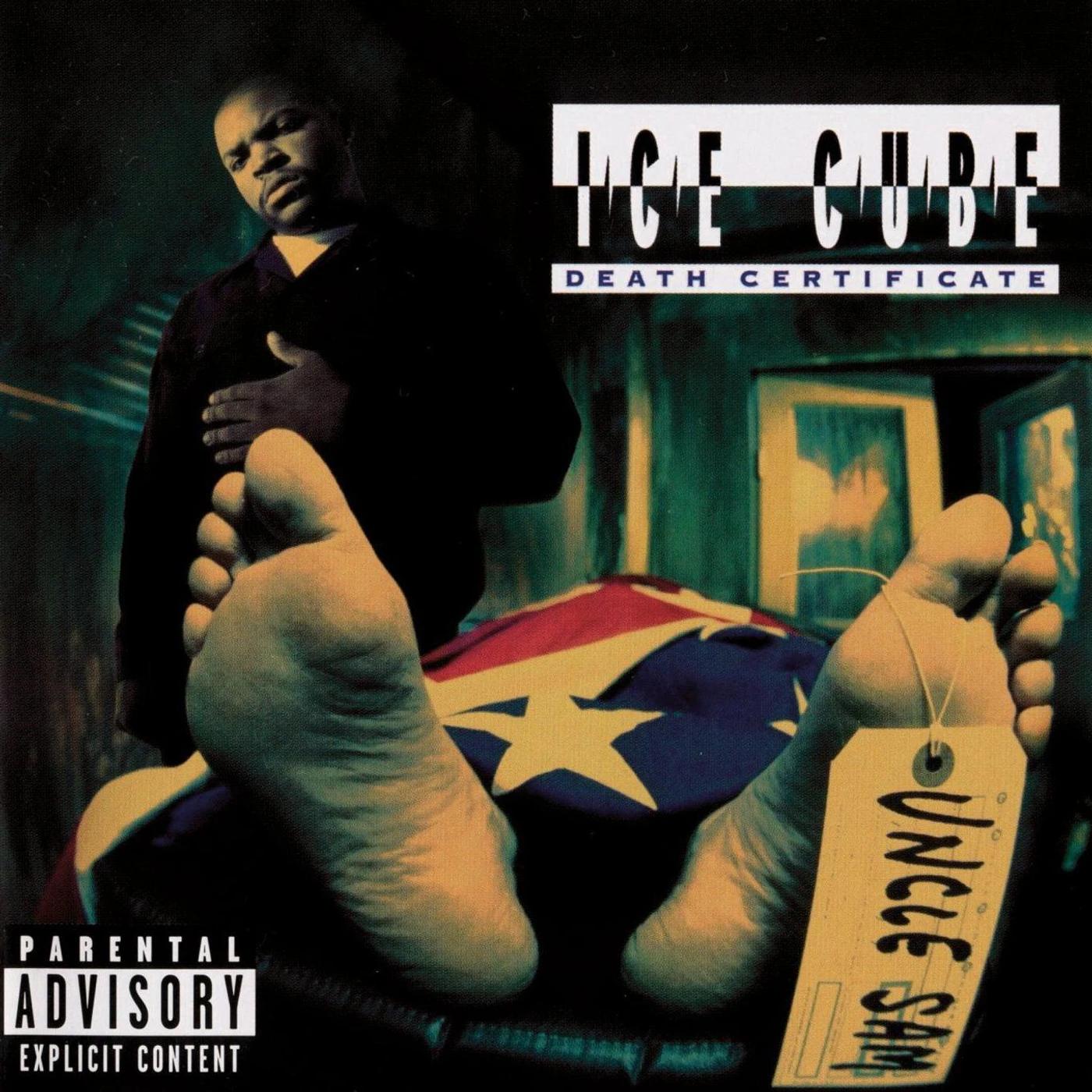
Thirty-five years ago, Ice Cube delivered an album that would help define an era of hip-hop. Released on October 29, 1991, Death Certificate wasn’t just another rap record. It was a bold, controversial, politically charged statement that challenged America, addressed problems within the Black community, and cemented Ice Cube’s reputation as one of the most fearless voices in music.
As we celebrate the 35th anniversary of Death Certificate in 2026, it’s worth revisiting what made this album special, the messages behind its most memorable tracks, and why it remains one of the most important projects in West Coast hip-hop history.
Ice Cube Was Already Becoming a Hip-Hop Legend
Before releasing Death Certificate, Ice Cube had already established himself as one of hip-hop’s most influential lyricists.
As a founding member of N.W.A, Cube helped introduce gangsta rap to mainstream audiences with groundbreaking records like Straight Outta Compton. His aggressive delivery, vivid storytelling, and willingness to discuss police brutality and life in South Central Los Angeles made him a standout member of the group.
After leaving N.W.A over financial disputes, Cube launched his solo career with AmeriKKKa’s Most Wanted in 1990. The album proved he could succeed without his former group and established him as a serious solo artist.
But Death Certificate would take his career to another level.
Instead of simply repeating the formula of his debut, Cube created a concept album that explored racism, violence, poverty, political frustration, and conflicts within the Black community.
The Meaning Behind Death Certificate
One of the most fascinating aspects of Death Certificate is its two-part structure.
The album is divided into two distinct sections: the Death Side and the Life Side.
The Death Side focuses on destructive behaviors, violence, social problems, and the harsh realities facing communities across America.
The Life Side shifts toward awareness, responsibility, empowerment, and the possibility of change.
This concept helped distinguish the album from other hip-hop releases of its time. Ice Cube wasn’t simply making music for entertainment. He was attempting to spark conversations about issues that many people preferred to ignore.
The album also reflected the anger and frustration of Black Americans during a period marked by racial tension, economic inequality, and strained relationships between communities and law enforcement.
7 Essential Tracks That Made Death Certificate a Classic
The original album features 20 tracks, including skits and interludes. Several songs remain among Ice Cube’s most recognizable and thought-provoking recordings.
-
Steady Mobbin’
One of the album’s most entertaining records, “Steady Mobbin’” shows Ice Cube’s storytelling ability, humor, and commanding delivery.
The funky production and unforgettable attitude helped make it a West Coast classic. It remains one of those tracks that instantly takes longtime hip-hop fans back to the early 1990s.
-
No Vaseline
When discussing the greatest diss tracks in hip-hop history, “No Vaseline” deserves a place near the top.
Ice Cube unleashed a brutal lyrical attack against his former N.W.A groupmates and their manager, Jerry Heller. The song addressed the bitter fallout following Cube’s departure from the group.
What made the record remarkable was Cube’s ability to take on an entire group by himself.
Decades later, “No Vaseline” continues to be discussed whenever fans debate the greatest rap diss records ever made. However, some of its attacks also relied on antisemitic and homophobic language that deserves criticism.
-
A Bird in the Hand
This is arguably one of the album’s most meaningful songs.
Ice Cube discusses the limited opportunities available to young Black men, particularly when trying to find legitimate employment.
The song challenges listeners to consider how poverty, discrimination, and a lack of opportunity can influence someone’s decisions.
Thirty-five years later, conversations surrounding economic inequality and employment opportunities make this record worth revisiting.
-
Color Blind
“Color Blind” addresses gang violence and the destructive consequences of neighborhood rivalries.
Featuring several West Coast rappers, including King Tee and Kam, the song explores the senseless violence associated with gang affiliations.
The message is particularly powerful because it encourages listeners to consider how internal conflicts can devastate communities.
-
My Summer Vacation
Ice Cube demonstrates his storytelling brilliance on “My Summer Vacation.”
The song follows gang members who take their criminal activities outside Los Angeles, illustrating how violence and drug trafficking can spread into other communities.
The detailed narrative makes the record feel almost like a short movie.
-
Alive on Arrival
Few tracks demonstrate Ice Cube’s ability to combine social commentary with storytelling better than “Alive on Arrival.”
The song follows a shooting victim navigating an overwhelmed hospital system while desperately needing medical attention.
Cube uses the story to criticize institutional failures and the treatment of people from disadvantaged communities.
-
True to the Game
On “True to the Game,” Ice Cube addresses identity, authenticity, and people who distance themselves from their communities after achieving success.
The record highlights his belief that success shouldn’t require abandoning your roots.
It’s another example of how Death Certificate extended beyond traditional gangsta rap themes.
The Production Helped Define West Coast Hip-Hop
While Ice Cube’s lyrics receive much of the attention, the album’s production deserves recognition.
Working with Sir Jinx and the Boogiemen production team, which included DJ Pooh, Bobcat, and Rashad Coes, Cube created a sound built around hard-hitting drums, funk samples, and aggressive grooves.
The production gave Cube room to deliver his lyrics without overwhelming the messages.
This was before Dr. Dre’s The Chronic helped popularize G-funk in 1992. Death Certificate represented a grittier West Coast sound that combined funk influences with street-oriented storytelling.
The Controversy Surrounding Death Certificate
It’s impossible to discuss this album without acknowledging the controversy.
Ice Cube addressed police brutality, racism, government policies, gang violence, and economic inequality with little concern for mainstream acceptance.
However, some of the album’s lyrics also drew legitimate criticism for promoting harmful stereotypes.
“Black Korea,” in particular, addressed tensions between Black residents and Korean American business owners but included inflammatory generalizations and threats. Other tracks contained misogynistic, antisemitic, or homophobic language.
Recognizing those problems doesn’t mean ignoring the album’s musical achievements or historical significance. Instead, it allows listeners to examine the record within the complicated social and political climate of 1991.
The album remains a powerful example of how hip-hop can simultaneously challenge injustice and reproduce harmful attitudes.
Death Certificate Was a Commercial Success
Despite its controversial subject matter, Death Certificate became a major commercial achievement.
Chart performance and album information reported by Universal Music and Ice Cube’s official discography.
The success demonstrated that audiences were willing to embrace music that challenged conventional expectations.
More importantly, it established Ice Cube as one of hip-hop’s biggest solo stars.
How Death Certificate Influenced Hip-Hop
The album’s impact extends well beyond its commercial success.
Ice Cube helped demonstrate that rappers could create projects built around larger concepts rather than simply collecting individual songs.
The album also showed how street narratives, political commentary, and social criticism could coexist within the same project.
Its influence can be heard in the work of later generations of rappers who use their platforms to address systemic injustice, neighborhood struggles, and personal experiences.
Artists such as Kendrick Lamar, whose albums frequently explore social and political issues, have continued the broader tradition of concept-driven West Coast hip-hop.
Although their approaches differ, Death Certificate helped establish an important foundation for that style of storytelling.
Where Does Death Certificate Rank Among Ice Cube’s Albums?
Ice Cube has released numerous projects throughout his career, but his early solo albums remain especially important to hip-hop fans.
AmeriKKKa’s Most Wanted introduced him as a formidable solo artist, while Death Certificate expanded his artistic ambitions.
Then came The Predator in 1992, featuring memorable records such as “It Was a Good Day” and “Check Yo Self.”
For me, Death Certificate deserves serious consideration as Ice Cube’s greatest album.
The combination of production, storytelling, aggression, and social commentary makes it a complete listening experience.
While The Predator might have more recognizable mainstream hits, Death Certificate arguably represents Cube at his most uncompromising.
Why Death Certificate Still Matters 35 Years Later
One of the most remarkable things about Death Certificate is how many of its underlying themes remain relevant.
Issues surrounding police accountability, economic inequality, community violence, and racial discrimination continue to generate national conversations.
That doesn’t mean every message on the album has aged well. Some deserve to be challenged rather than celebrated.
Nevertheless, the record remains an important historical document that captures the frustrations and contradictions of its era.
When Ice Cube released the album, he wasn’t trying to make everyone comfortable. He wanted people to pay attention.
And 35 years later, people are still listening.
Final Thoughts: Celebrating 35 Years of a Hip-Hop Classic
October 29, 2026, marks 35 years since Ice Cube released one of the most important albums of his legendary career.
Death Certificate was aggressive, controversial, insightful, and impossible to ignore.
From the storytelling on “My Summer Vacation” to the social commentary on “A Bird in the Hand” and the legendary diss track “No Vaseline,” the album delivered moments that helped shape hip-hop history.
Ice Cube would go on to become a successful actor, filmmaker, entrepreneur, and cultural icon. But for longtime hip-hop fans, his early solo albums remain essential listening.
Happy 35th anniversary to Ice Cube’s Death Certificate, a landmark album that helped change West Coast hip-hop forever.
For more classic hip-hop anniversaries, album reviews, and music discussions, keep checking out Sports and Music Dad.
Let’s Debate: Is Death Certificate Ice Cube’s greatest album, or do you prefer AmeriKKKa’s Most Wanted or The Predator? And what’s your favorite track from this 1991 classic? Check out the track listing and stream link for the Death Certificate album below.
- The Funeral (Intro)
- The Wrong Nigga to Fuck Wit
- My Summer Vacation
- Steady Mobbin’
- Robin Lench (Interlude)
- Givin’ Up the Nappy Dug Out
- Look Who’s Burnin’
- A Bird in the Hand
- Man’s Best Friend
- Alive on Arrival
- Death ft. Khalid Abdul Muhammad
- The Birth ft. Khalid Abdul Muhammad
- I Wanna Kill Sam
- Horny Lil’ Devil
- Black Korea
- True to the Game
- Color Blind ft. Deadly Threat, Kam, the Madd Circle, King Tee & J-Dee